Classical Cryptanalysis: Vigenère Cipher
Background
The Vigenère cipher is a polyalphabetic substitution cipher defined as:
Ci = (Pi + Ki) mod 26
Its security depends on the secrecy of the key length and key characters.
Key Length Detection
Two statistical techniques are used:
Index of Coincidence (IC)
The IC measures the probability that two randomly selected letters are identical. English text has a higher IC than random text. By computing IC for different assumed key lengths, the correct key length can be estimated.
Kasiski Examination
Repeated ciphertext patterns reveal periodic spacing. The greatest common divisor of these spacings provides candidate key lengths.
Frequency Analysis
After determining the key length, the ciphertext is divided into columns. Each column behaves like a Caesar cipher. By comparing letter frequency distributions with English frequencies, the shift for each column is determined and the key is reconstructed.
Results
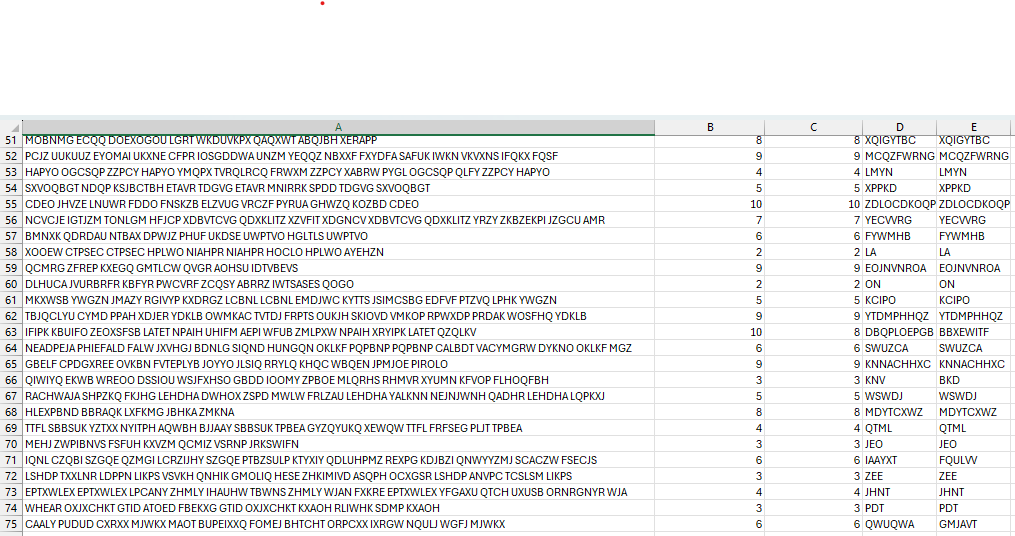
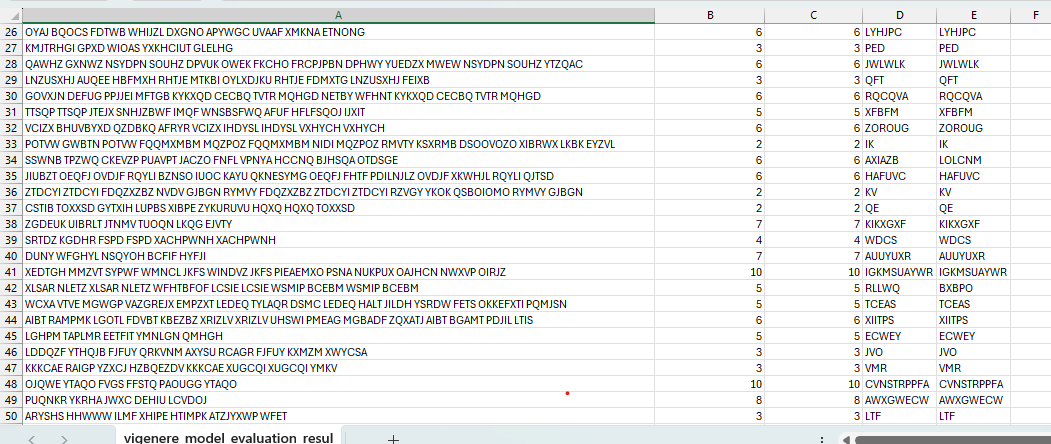
Outcome
- Successful recovery of the key
- Demonstration of classical statistical cryptanalysis
- Baseline comparison for modern machine learning based attacks